
Application Cases
Flush-Diaphragm Pressure Measurement on a Viscous Chemical Reactor
Recurring pressure-tap blockages on a resin reactor made pressure readings fictional between clean-outs. Flush-diaphragm transmitters with high-temperature construction measure at the vessel wall — no impulse lines to clog, no weekly rodding-out.
Some pressure measurements fail not because the transmitter is wrong, but because the medium never reaches it. On viscous, crystallizing processes the impulse line between vessel and sensor is a plug waiting to form — and the reading freezes at a plausible value while the real pressure moves on. This anonymized case is a common one in resin and polymer production.
The situation
A specialty chemicals producer runs jacketed batch reactors making resin intermediates. Reactor pressure is a safety-relevant and recipe-relevant variable: it is interlocked with heating and venting, and batch records include the pressure profile. The original installation measured through a short impulse line to a conventional threaded transmitter mounted off the vessel nozzle.
The challenge
The product thickens as the batch progresses and coats everything it touches. The impulse line and the transmitter's recessed pressure cavity progressively plugged with cured resin: readings lagged, then flat-lined mid-batch, and each campaign ended with the line being rodded out or replaced. Worse, a frozen reading on an interlocked variable is worse than no reading — the control system believed a number that no longer described the reactor. Cleaning also meant breaking into a pressure boundary on a chemical vessel, a permit-and-PPE job nobody schedules willingly.
The solution
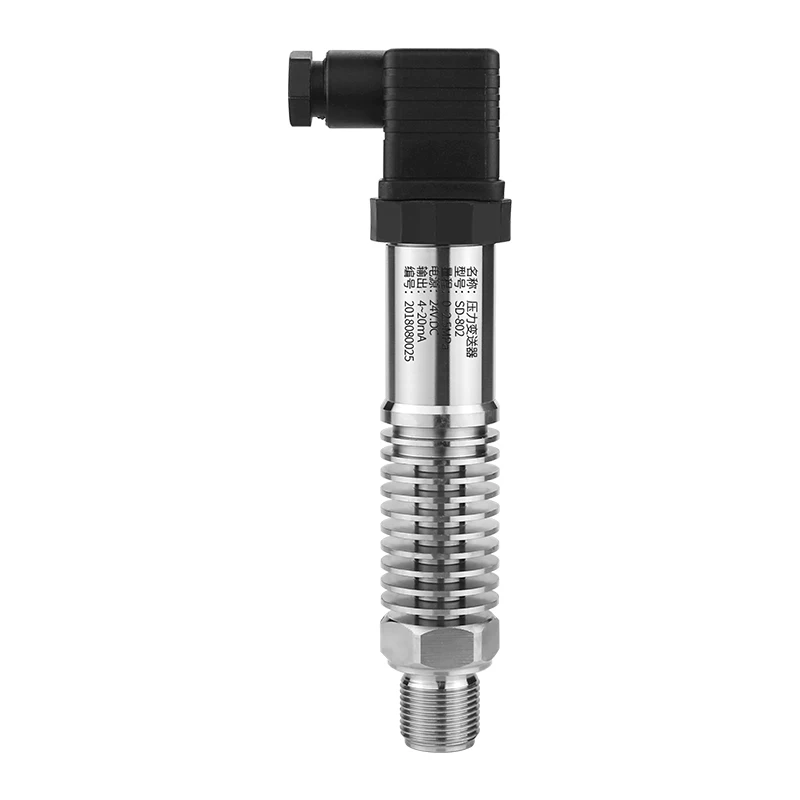
The tappings were rebuilt as flush-diaphragm pressure transmitters mounted directly on the reactor nozzles: the diaphragm sits flush with the vessel's inner wall, so there is no cavity and no impulse line for resin to accumulate in, and the process wipes the diaphragm face as it moves. The transmitters were specified with a high-temperature construction (remote electronics via a cooling section), so reactor temperatures do not overheat the amplifier, and with 4–20 mA output to reuse the existing loops and interlock inputs unchanged. Diaphragm material was matched to the chemistry of the resin system and its cleaning solvents.
The result
Pressure traces now follow the batch from charge to discharge, with no mid-campaign clean-outs: the rodding-out task disappeared from the campaign checklist entirely, and the interlock again acts on a live measurement. Batch pressure profiles have become usable quality records, and deviations between batches are now attributable to the process rather than to the state of a tapping line.
Whenever a medium can coat, cure, crystallize or settle, measure it where it lives — flush at the wall — instead of asking it to travel down a pipe to meet the sensor.
Products used: Industrial Pressure Transmitter · High-Temperature Pressure Transmitter
Industry: Specialty chemicals / resin production
Related products: Industrial Pressure Transmitter · High-Temperature Pressure Transmitter